Yashara Biosciences
Precision software infrastructure
for the life sciences.
We build rigorous, scalable computational tools for biologists, biochemists, and laboratory compliance teams — purpose-engineered for the demands of the laboratory, not repurposed from the enterprise.
>10k
Cells/hour
FluorocellAI throughput
21
CLIA modules
ComplianceCall coverage
<3 hr
From 4 days
Screening time reduction
0
D-Tags cited
In customer surveys
Our Founding Premise
Scientific software built to the standard of the laboratory itself.
Too many tools in the life sciences ecosystem were designed for generic enterprise markets and subsequently adapted — imperfectly — for laboratory use. The result is software that demands the investigator adapt to its limitations rather than the reverse.
Every product we release is designed in close collaboration with working biologists, biochemists, and laboratory compliance professionals.
“The highest cost in laboratory science is not the instrument or the reagent — it is the time lost to tools that were not built for the work.”
Product Suite
No More Labeling on Fiji
Each platform addresses a distinct domain of laboratory operations — sharing a common design philosophy: exactitude over convenience, transparency over opacity, durability over novelty.
FluorocellAI
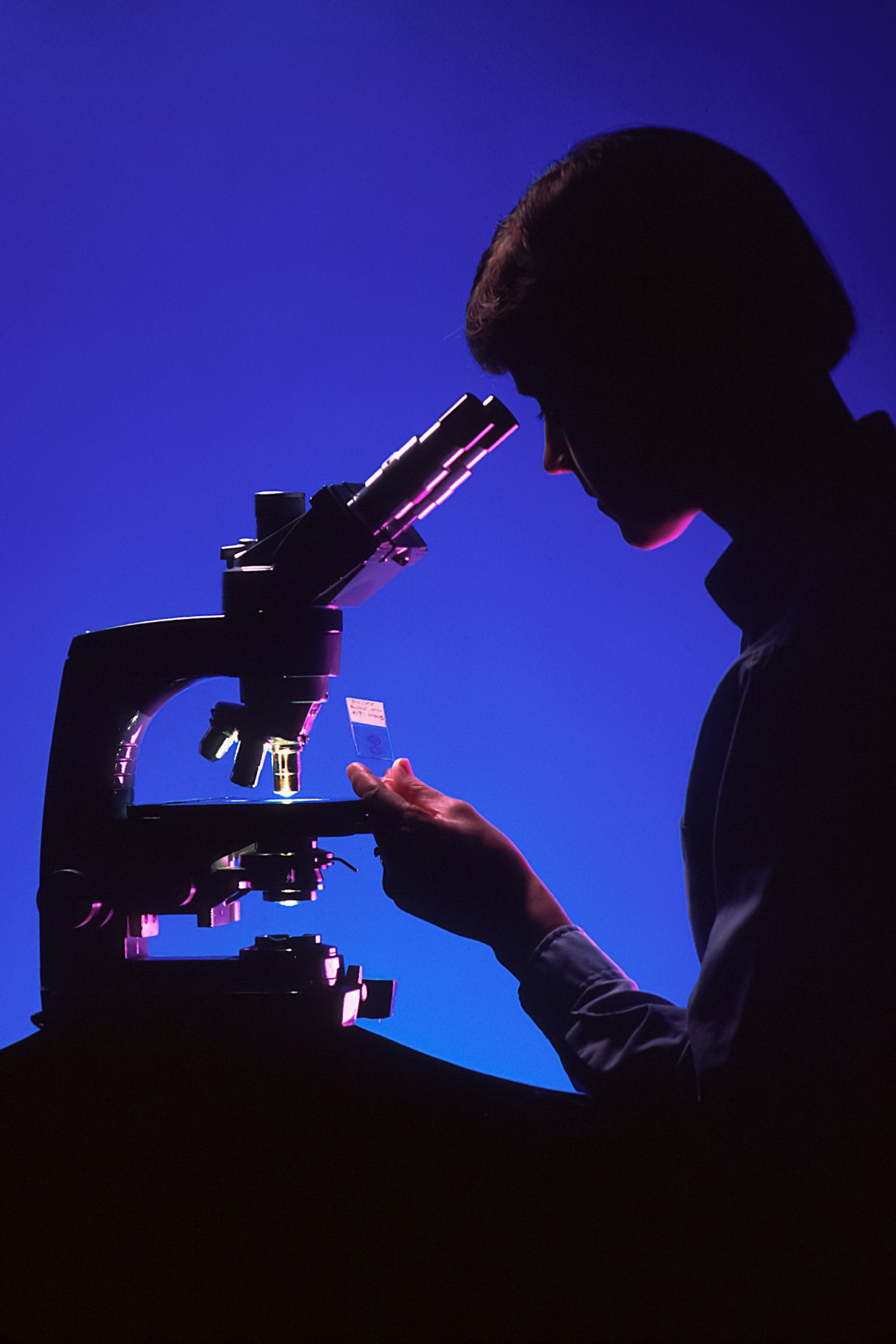
High-throughput AI cell labeling and segmentation, integrating natively with ImageJ, Fiji, OMERO, and CellProfiler. Institutional-grade accuracy — accessible to a single-investigator R01 budget.
- Transformer + CNN ensemble model
- DAPI / GFP / RFP multi-channel
- >10,000 cells/hr batch throughput
- 3D confocal & light-sheet support

ComplianceCall
End-to-end CLIA compliance management — personnel credentialing, QC scheduling, document control with e-signatures, and live Federal Register integration in a single auditable platform.
- 21 integrated CLIA modules
- Live FDA & Federal Register sync
- Multi-lab consulting accounts
- DTag prevention & survey prep
FluorocellAI
Research-grade segmentation. Without the research-grade wait.
FluorocellAI reduces a 384-well screen from four days of manual annotation to under three hours. Our transformer + CNN ensemble matches expert-level accuracy, integrates into your existing ImageJ pipeline, and leaves every downstream measurement intact.
ComplianceCall
Know before your inspector does.
ComplianceCall maintains live connections to the CLIA Federal Register and FDA CLIA test database. When a new requirement is promulgated, your compliance dashboard updates automatically — not at your next survey. The DTag prevention engine proactively surfaces deficiencies before an inspector can cite them.
Design Philosophy
How we build.
Domain specificity over generality
A cell biologist's segmentation workflow and a compliance officer's audit trail are not variations on the same problem. We build each platform as if it were the only thing we make.
Institutional durability over rapid iteration
Laboratory workflows cannot be interrupted by disruptive UI redesigns or breaking API changes. We version everything, deprecate nothing without multi-year notice.
Affordable by design
Institutional-grade software should not be the exclusive province of institutions with eight-figure IT budgets. We price against the NIH R01 budget.
From the Laboratory
What research teams say.
“We reduced manual cell counting time for a 384-well screen from four days to under three hours. The segmentation accuracy was indistinguishable from expert manual annotation in our internal benchmarking.”
Dr. M. Kowalski
Senior Research Scientist, Cell Biology — Academic Medical Center
“The CLIA Federal Register integration alone is worth the subscription. Our last survey was the first in six years where no documentation deficiencies were cited. The DTag prevention module flagged three issues before the inspector arrived.”
R. Patel, MT(ASCP)
Technical Consultant — Independent Laboratory Consulting Practice
“PuroChem is the only tool we've found that tells us not just what a chemical's current hazard category is, but what it used to be and why it changed. That historical record is exactly what our EHS auditors ask for.”
Dr. S. Okonkwo
Chemical Hygiene Officer — Research University
Ecosystem
Integrates with the tools your laboratory already uses.

Next Steps
Ready to evaluate the Yashara platform?
We provide structured evaluation access for qualified research teams and clinical laboratories. Demonstrations are conducted by domain specialists, tailored to your specific workflow — not a generic product tour.